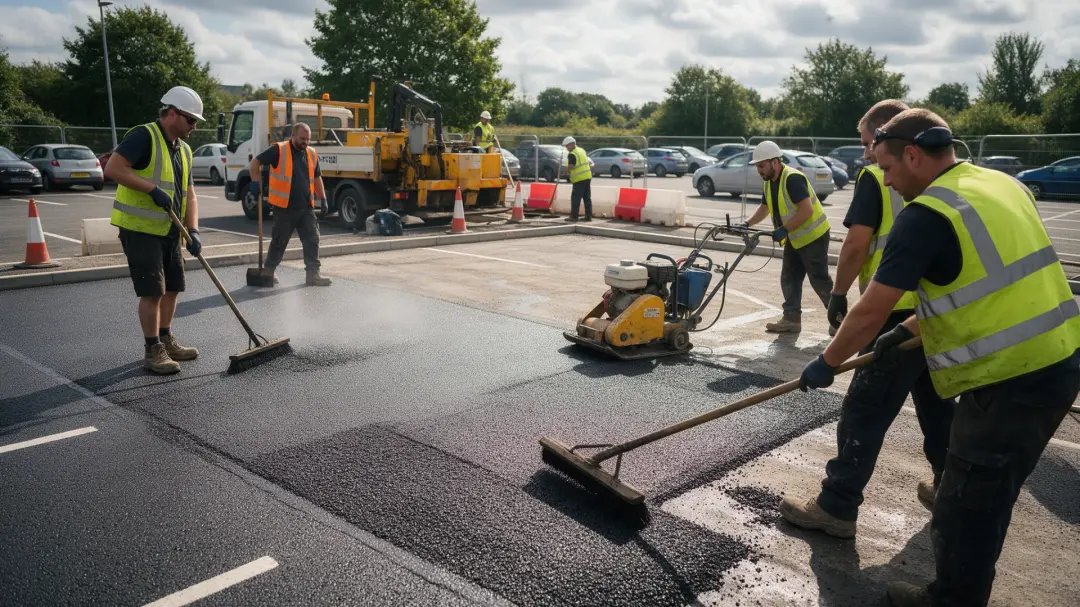
The right surface depends on how an area will be used, how water leaves it and what lies underneath. A decorative entrance, delivery yard and lightly used access lane need different specifications. Start with those practical requirements, then compare appearance and cost. One material may not suit every part of your property.
Start with traffic rather than colour
Identify the heaviest vehicles likely to use the area, where they turn and whether they remain parked for long periods. Include occasional deliveries rather than designing only around everyday cars.
A car park entrance may experience concentrated turning movements even when the bays receive relatively little wear. Pedestrian routes bring separate needs, including comfortable access and transitions without awkward edges. This information helps a contractor assess the complete construction, rather than recommending a surface because it looks attractive in a photograph.
Asphalt for connected, practical areas
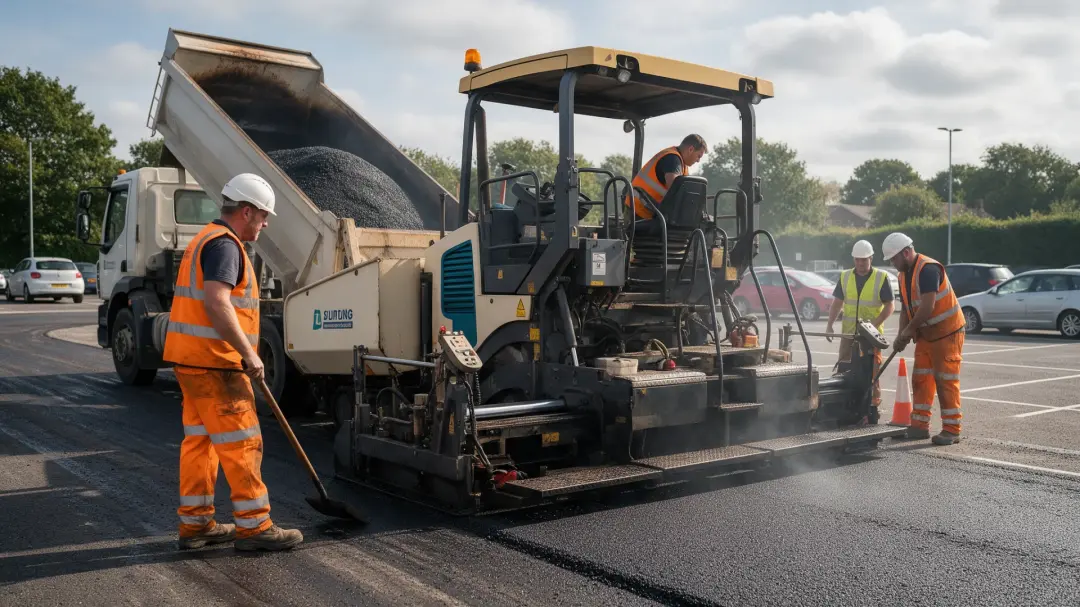
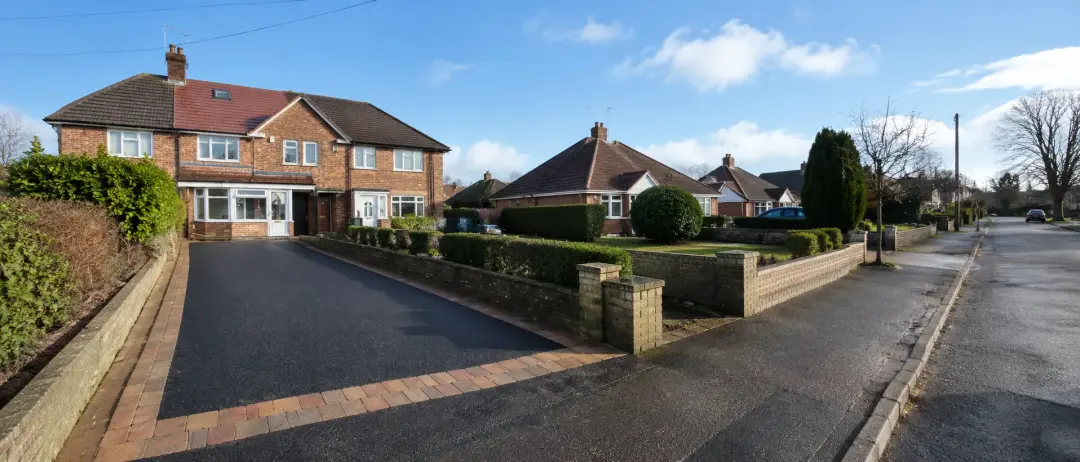
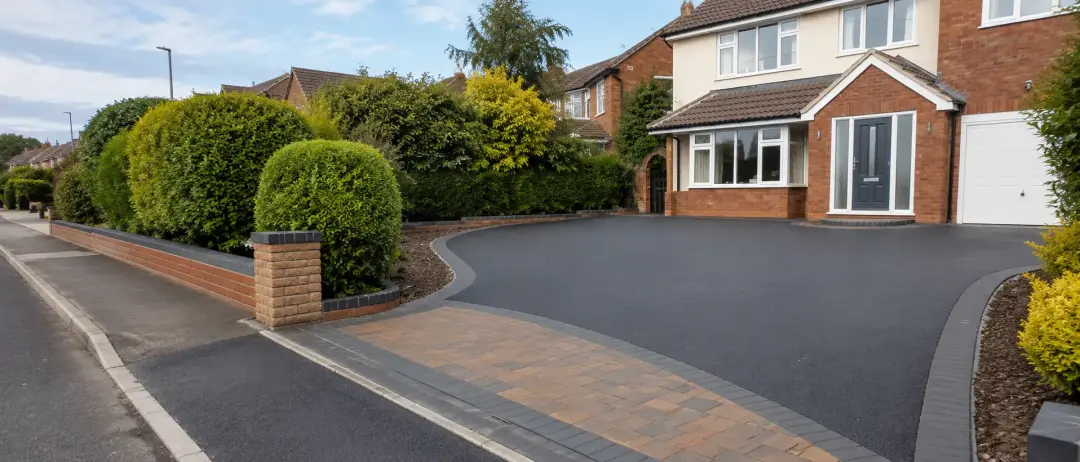
Asphalt is worth considering for driveways, private roads and car parks where a continuous surface is useful. Suitability depends on the mix, layers, base and expected loading. Standard dense asphalt does not automatically let water drain through, so gradients and runoff management need attention.
An existing asphalt area may sometimes be resurfaced rather than fully reconstructed, but only after its condition is assessed. Ask for an explanation of the proposed specification and how it meets the uses you have described.
Surface dressing for suitable existing roads
Surface dressing treats an existing road surface rather than replacing the need for a road foundation. Essex Highways says it uses the treatment where a surface remains reasonably sound and needs overall improvement that can last up to 10 years.
That is the council's indication for suitable road conditions, not a guaranteed lifespan for every private site. See Essex Highways' explanation. Discuss existing defects and whether repairs are needed before dressing is considered.
Resin bound where appearance and access matter
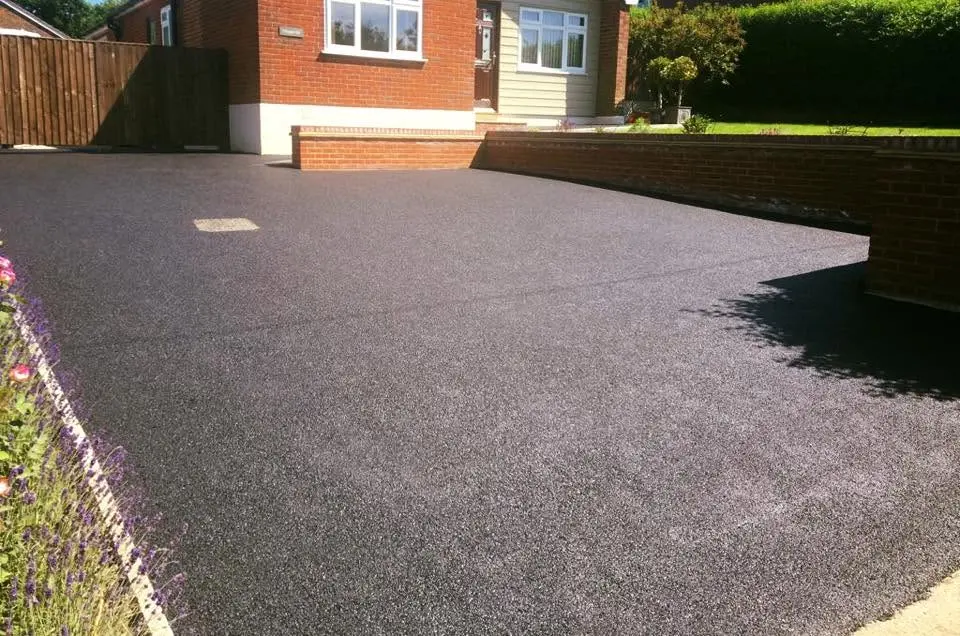
Resin bound surfacing mixes aggregate with resin to create a connected decorative finish. It can suit entrances and paths when specified for the intended traffic. Do not confuse it with resin bonded surfacing, which has a different construction.
Water passing through a resin bound top layer does not prove the entire driveway drains adequately; the base and ground matter too. Choose the system first and colour second, with confirmation that the build-up meets your project's drainage and loading requirements.
Concrete, paving and gravel as alternatives
Concrete can be considered where a designed rigid surface fits the use, but joints, levels and eventual repairs need thought. Individual paving units offer a different appearance and repair approach; ordinary paving should not be assumed permeable without a suitable system underneath.
Gravel can suit some lightly used areas, although migration, rutting and access comfort deserve consideration. These are material comparisons rather than a promise that every option is offered by Colne Contractors Surfacing. Establish what is appropriate and available for your particular site.
Compare drainage and future maintenance
Think beyond completion day. Who will clear drainage points, remove leaves and arrange repairs? A shaded path beside trees has different maintenance demands from an open parking area. Where water needs to soak into the ground, establish whether ground conditions make that workable.
Where water is collected and conveyed elsewhere, agree a suitable outlet. A decorative surface cannot compensate for unsuitable drainage, and a low initial price can be misleading if essential preparation has been omitted. Include these practical responsibilities in your decision.
Make the choice through a written specification
Ask for excavation, foundation preparation, surfacing layers, edge restraints and drainage to be described in the quote. Compare complete proposals rather than material names alone. If choosing between resurfacing and rebuilding, ask what evidence supports each approach.
Explain any future change in use, such as adding a larger vehicle or opening the area to deliveries. The best choice balances the site's conditions, your priorities and the maintenance you are prepared to organise, rather than following a general recommendation for every property.
Summary
Whether your project is in Colchester or Chelmsford, start by describing the use and site conditions rather than requesting a material by name alone.
Match traffic, drainage, foundations and appearance to the intended use. Asphalt, surface dressing and resin bound systems perform different roles, so comparing complete specifications is essential. Speak to Colne Contractors Surfacing about your project and the surfacing options suited to the area.