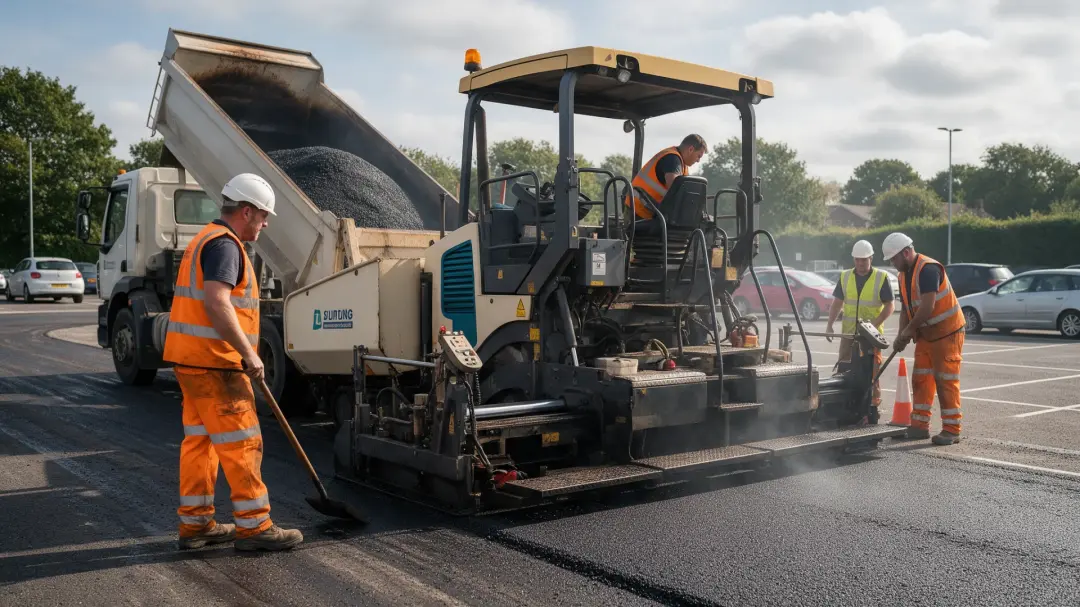
Loose material, recurring puddles and returning cracks give you opportunities to act before a driveway becomes difficult to use. The question is whether the damage is confined to the top layer or begins underneath it. That distinction determines whether a local repair, resurfacing or reconstruction offers the most sensible outcome.
Cracks that keep coming back
A single fine crack deserves monitoring but does not automatically justify replacing the driveway. Look for cracks that widen, spread into connected patterns or reopen after previous repairs. These can suggest movement, water damage or weakness below the visible surface.
Photograph the same area periodically so changes are easier to identify. A contractor should investigate the cause before recommending an overlay; fresh material cannot stabilise a foundation that continues to move.
Loose stones and a roughening surface
When aggregate begins coming away from asphalt, the surface can develop a gritty, uneven texture. A small worn patch near a frequently used turning point needs a different assessment from loose material across the entire drive.
Sweep an affected area gently and see whether further material continues to detach. Widespread deterioration, especially alongside cracking, can indicate that patching alone will leave you repeatedly repairing neighbouring sections. The extent of sound surrounding material matters more than the driveway's colour.
Puddles that remain after rain
A persistent pool in the same depression is more informative than temporary wetness during a downpour. Watch where water travels and whether it reaches the intended drainage point. Blocked channels, settlement and unsuitable falls can produce similar symptoms but require different remedies.
Covering a low spot may alter levels at the garage, pavement or front door. Ask how the proposed work will manage runoff as well as improve appearance. Any new drainage arrangement should have a suitable, agreed destination.
Potholes, soft spots and sinking edges
Holes exposing deeper layers and depressions that worsen under a parked vehicle need prompt assessment. Avoid repeatedly loading a visibly unstable area and keep people away from trip hazards.
Edges beside lawns can also break down where they lack support. Resurfacing may be practical when the existing structure is sound, with local defects repaired first. If several areas have sunk, the investigation should include the base rather than assuming a new wearing course will solve everything.
Repeated repairs and current road-condition figures
The Department for Transport's latest road-condition release, covering the year ending March 2025, reports that 17% of England's local authority unclassified road network was in the red category, meaning maintenance should have been considered.
These public-road statistics are not a diagnosis of your driveway. They illustrate why condition assessment matters before a surface becomes unusable. Read the official figures. Keep previous repair invoices and identify whether damage returns in the same location.
Fading is different from structural failure
Older asphalt can lose its original dark appearance while remaining usable. Cosmetic fading alone is a weak reason to commission major work. Conversely, a freshly treated surface can still conceal depressions or drainage problems.
Assess performance: is the drive stable, reasonably even and comfortable to walk across? If appearance is the main concern, discuss appropriate cleaning or compatible treatment. If performance has deteriorated, get an assessment of the underlying construction before choosing a cosmetic finish. Age is helpful background information, but condition is more useful.
Getting an assessment you can compare
Show the contractor the driveway after rain if possible and explain which vehicles regularly use it. Ask which areas need excavation, whether existing levels can be retained and how edges and covers will be finished.
A resurfacing proposal should identify preparation, the intended surface and access arrangements. Compare those details rather than only the final price. A clear explanation of why an overlay is suitable is more valuable than a promise that every damaged driveway can be resurfaced.
Summary
For driveways in Colchester and Chelmsford, an inspection can establish whether worn surfacing or deeper construction is the main issue.
Recurring cracks, loose material, pooling water and repeated patching are reasons to arrange an inspection. Resurfacing is most useful where the existing structure can support it; deeper failures need a different approach. Discuss your driveway with Colne Contractors Surfacing and request an assessment of the preparation and surfacing work needed.