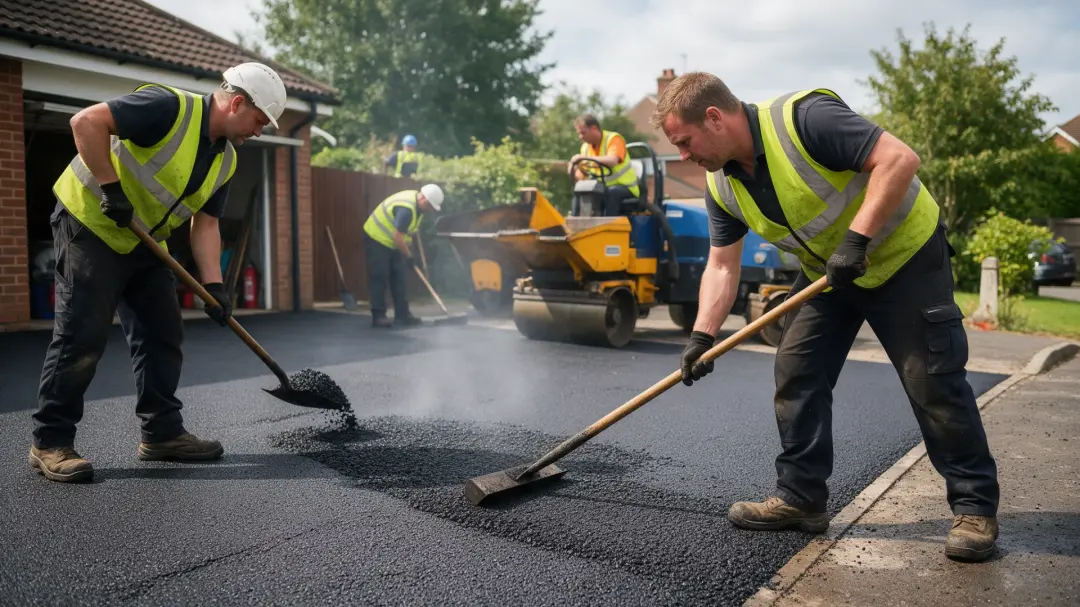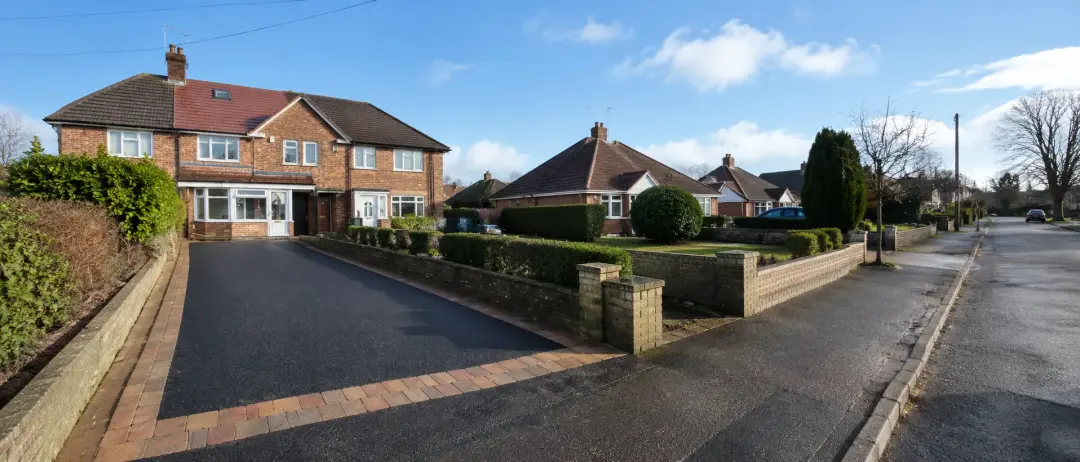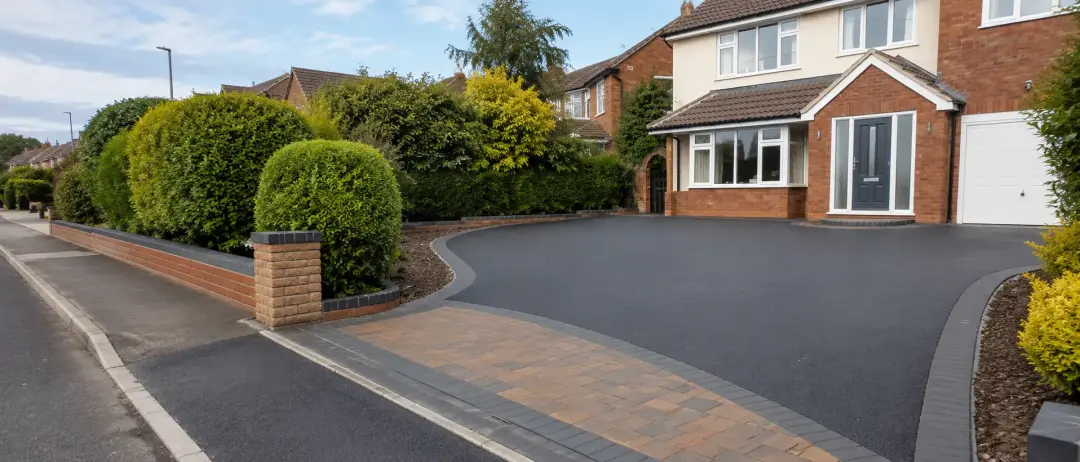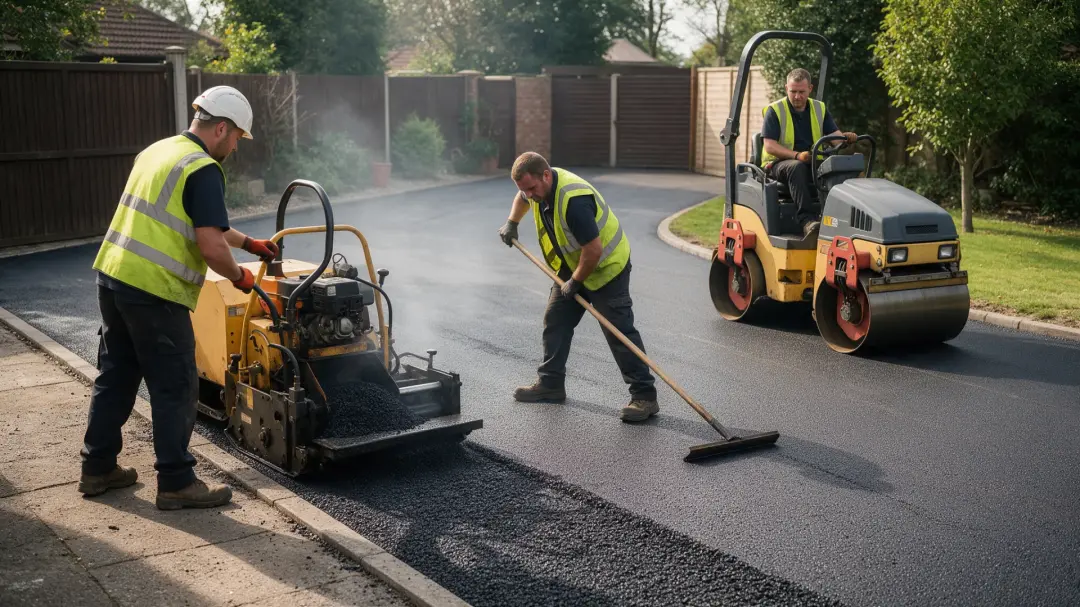
Tarmac driveway maintenance is most effective when it prevents small problems from becoming repeated repairs. Keep the surface clean, watch where water goes and use the driveway within its intended limits. Care should reflect the material and installation you have, particularly while a new surface is still settling into normal use.
Follow the instructions for a new driveway
Ask the installer for separate guidance on walking, parking and heavier vehicles. Do not decide reopening from appearance alone. As one example, Premier Surfacing's published aftercare guide advises avoiding heavy vehicle traffic for the first three days after new surfacing.
That is the author's precaution for the work described, not a universal rule for all asphalt. Read the published aftercare guide. Follow the specific handover instructions for your own driveway and ask before allowing an unusual load onto it.
Sweep debris and check drainage points
Remove leaves, soil and other debris before they build up around channels, covers and low areas. Observe the driveway during rain occasionally so you can spot changes in water movement.
A blocked drainage point needs a different response from a depression caused by settlement. Avoid forcing debris into a drain while cleaning. If water begins remaining where it previously drained away, investigate the cause rather than simply applying a surface treatment. Accessible drains should be checked as part of normal property care.
Respond sensibly to spills
Deal with vehicle fluid leaks promptly using a method compatible with the asphalt and the substance involved. Avoid spreading contamination or washing it into drains. Ask for suitable cleaning guidance if you are uncertain, particularly after a substantial spill.
Repairing the leaking vehicle is as important as cleaning the surface because repeated exposure can undo that effort. Keep children and pets away until the area is safely dealt with. If material becomes soft or breaks up after contamination, arrange an assessment rather than hiding it beneath a coating.
Avoid concentrated loads and harsh manoeuvres
Turn smoothly and avoid twisting the wheels sharply while stationary, especially on a newly laid or sun-warmed surface. Items such as trailer supports and small castors can concentrate weight onto a small area.
Discuss suitable load-spreading arrangements with the installer rather than assuming a car-sized total weight tells the whole story. If you regularly use a caravan, larger van or machinery, make sure the driveway was designed for that use. Maintenance cannot compensate for a construction that is inappropriate for the loads it receives.
Take heat into account
The Met Office confirmed in January 2026 that 2025 was the UK's warmest and sunniest year on record. It also reported that a new annual mean temperature record had been set six times since the start of this century.
These national observations do not predict an individual driveway's temperature. They reinforce the value of taking extra care with manoeuvres and concentrated loads during hot conditions. Read the Met Office update. Ask your installer about precautions appropriate to the surface.
Inspect cracks, edges and changing levels
Check the same areas periodically, including the entrance, turning points and edges beside soft ground. Small photographs taken from the same position can make gradual changes clearer. Note cracks that widen or return after repair, and depressions that collect water.
A local defect may be repairable, but recurring movement deserves investigation underneath the surface. Arrange advice before deterioration affects comfortable access. Keep repair records so the contractor can see what has already been tried and whether damage is developing in the same place.
Be selective about treatments and repairs
A sealant or dressing is not automatically necessary for every driveway and will not rebuild a weak base. Before agreeing a treatment, ask whether it is compatible with your surface and what problem it is intended to address.
Check cleaning and reopening requirements too. Where a repair is proposed, understand its extent and how the underlying cause will be dealt with. Routine sweeping and drainage checks are useful habits; additional products should be chosen on the needs of the actual driveway rather than a blanket schedule.
Summary
Homeowners in Chelmsford and Colchester can use installation records and photographs to explain a maintenance concern when requesting advice.
Protect your tarmac driveway through suitable cleaning, clear drainage, careful vehicle use and early investigation of changing defects. Follow its own aftercare instructions before selecting treatments or repairs. Contact Colne Contractors Surfacing if you need an assessment of wear or a problem that routine maintenance cannot resolve.