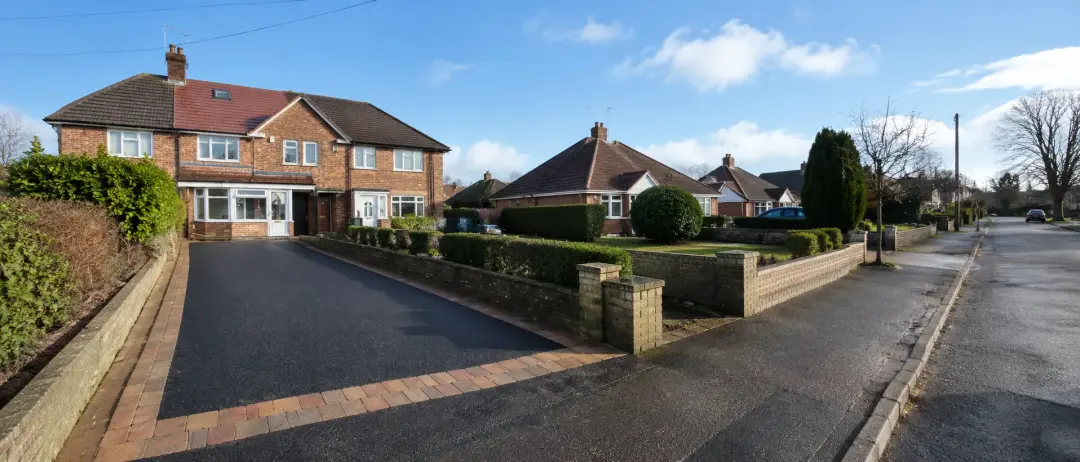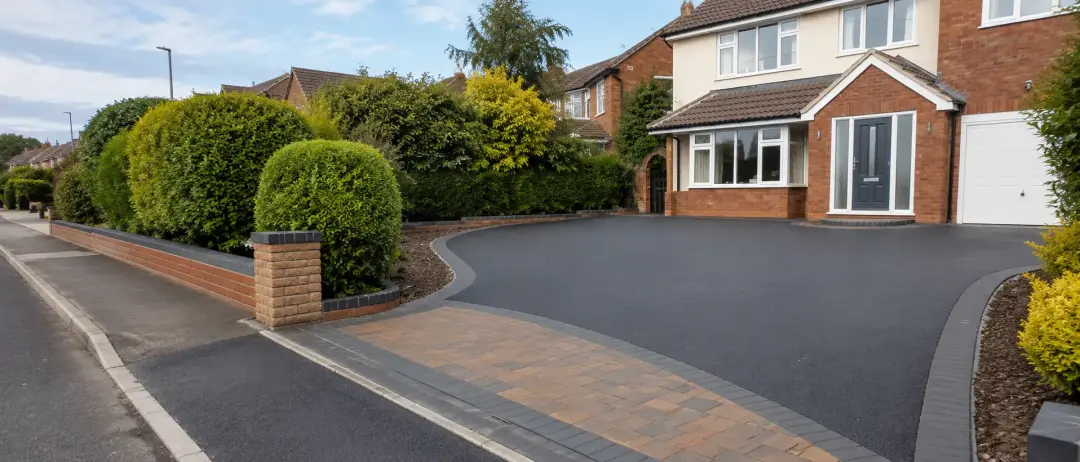
A well-installed tarmac driveway can generally last around 15 to 20 years, although its actual lifespan will depend on the quality of the installation, the ground beneath it, drainage, vehicle use and ongoing maintenance.
With a strong base and prompt repairs when damage appears, some tarmac driveways can remain useful for even longer. Understanding what affects the surface can help homeowners get more years from their driveway.
What Is the Average Lifespan of a Tarmac Driveway?
A professionally installed tarmac driveway will commonly provide around 15 to 20 years of useful service. Tarmac, one of the largest asphalt producers in the United Kingdom, states that a properly installed asphalt driveway should generally last for up to 20 years. The final lifespan can be shorter or longer depending on how the driveway has been constructed and used.
The durability of asphalt-based surfaces is one reason the material is used so widely. The Asphalt Industry Alliance reports that asphalt is used on more than 95% of roads in the United Kingdom, with more than 20 million tonnes produced for construction and maintenance each year.
For a domestic driveway, reaching the longer end of the expected lifespan usually depends on having a properly prepared foundation, suitable drainage and repairs being completed before small problems become more serious.
Why Does the Quality of Installation Matter?
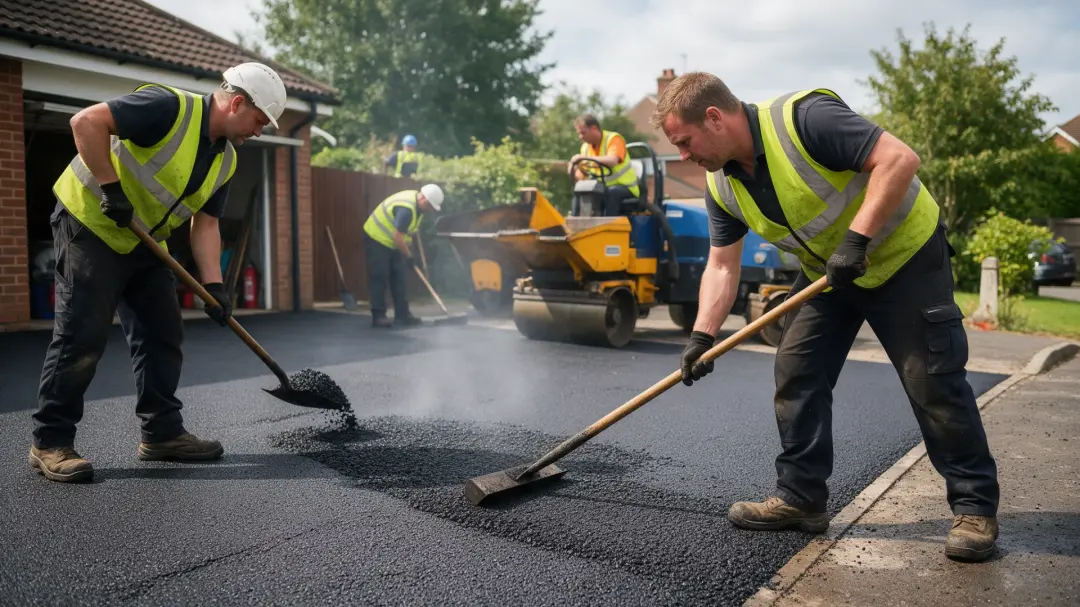
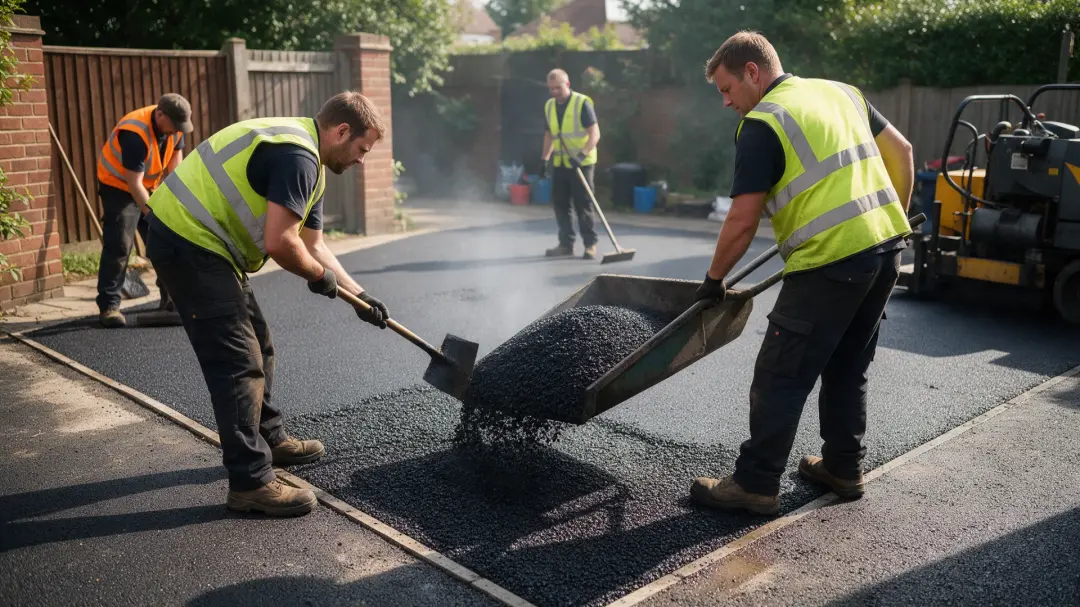
The lifespan of a tarmac driveway starts with what is underneath the visible surface. A driveway needs a firm and stable base so that it can support the weight of vehicles without moving, sinking or developing cracks. Simply laying a surface over poorly prepared ground can lead to problems much sooner.
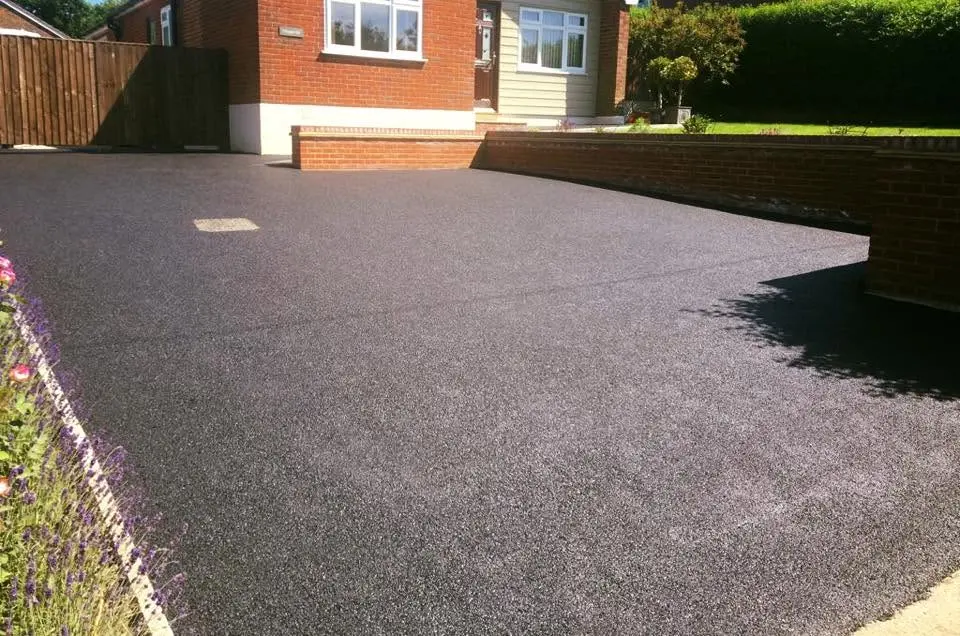
The ground should be prepared to suit the conditions of the property and the amount of traffic expected. The base must then be properly compacted before the tarmac layers are applied.
Correct installation also helps the surface remain even. Weak areas underneath the driveway can eventually show at the surface as dips, cracks or sections that begin to break apart.
The edges also need suitable support. Unsupported edges can become damaged when vehicles repeatedly drive close to them, particularly where a driveway meets a lawn, soil or another soft surface.
How Does Vehicle Use Affect a Tarmac Driveway?
The number and weight of vehicles using a driveway can affect how quickly it wears. A domestic driveway used by one or two cars will normally face much less pressure than an area regularly used by vans, large delivery vehicles or other heavy traffic.
Road maintenance guidance gives a useful example of this relationship between asphalt life and traffic. Several UK councils state that new asphalt road surfaces can last around 10 to 20 years depending on the amount of traffic using them. Domestic driveways face different conditions, but the same basic principle applies. Greater and heavier use can increase wear.
Repeatedly parking heavy vehicles in exactly the same position may also place added pressure on particular areas. A properly designed base is therefore particularly important where larger vehicles will regularly use the driveway.
Read related articles:
What Are the Benefits of a Tarmac Driveway?
Is a Tarmac Driveway a Good Investment?
Does British Weather Reduce the Lifespan of Tarmac?
Tarmac is well suited to outdoor use, but it is still exposed to rain, heat, frost and changing temperatures throughout its life. Water is especially important because it can enter damaged areas and affect the material underneath. Good drainage and early repairs can therefore make a significant difference.
Weather conditions in the United Kingdom are also changing. The Met Office reported that the decade from 2016 to 2025 was 0.51°C warmer than the 1991 to 2020 average. The winter half of the year during the same decade was also 3% wetter than the 1991 to 2020 average.
These figures make effective drainage increasingly important for outdoor surfaces. Water should be directed away rather than being allowed to sit in puddles for long periods.
During cold weather, water that has entered cracks can freeze and expand. Repeated cycles of freezing and thawing may gradually make existing damage worse, which is another reason to deal with cracks early.
How Important Is Driveway Drainage?
Drainage is one of the main factors that can affect how a driveway performs over many years. Standing water may find its way into small cracks or weakened areas and can contribute to damage beneath the surface.
A professionally designed driveway should allow rainwater to move away efficiently. Depending on the property, this might involve suitable gradients, drainage channels or a surface designed to manage water in another appropriate way.
Drainage should be considered before the tarmac is installed rather than treated as an afterthought. Changing levels or adding drainage after the driveway has been completed may be more difficult and can increase the amount of work required.
What Maintenance Can Make Tarmac Last Longer?
Tarmac generally needs limited routine maintenance, but simple care can help prevent avoidable damage. Leaves, soil and other dirt should be removed so that drainage points remain clear and water can flow away from the driveway.
Oil and other vehicle fluids should also be cleaned where possible. Certain substances can affect the surface if they remain in contact with it for long periods.
It is also sensible to inspect the driveway from time to time. Small cracks and areas of wear are normally easier to deal with before water gets into them or vehicles cause the damaged area to spread.
Can Cracks in a Tarmac Driveway Be Repaired?
Small cracks do not automatically mean that an entire driveway needs to be replaced. In many cases, local repairs can be carried out if the surrounding surface and the base remain in good condition.
Repairing damage early can help stop water entering beneath the surface. A contractor can assess whether filling or repairing a specific area is suitable, or whether the problem is linked to movement or weakness lower down.
Large cracks that return after repair may indicate a problem with the base. Simply covering the visible crack may not provide a lasting answer if movement beneath the tarmac is causing the damage.
When Should a Tarmac Driveway Be Resurfaced?
Resurfacing can sometimes extend the useful life of an older driveway without completely rebuilding it. This normally involves applying a new surface over a suitable existing structure.
Whether resurfacing is suitable depends on the condition of the driveway underneath. If the existing base remains sound, a new surface may improve its appearance and performance. If there is widespread sinking, movement or serious structural damage, more extensive work may be required.
The same principle is used on larger asphalt surfaces. Government information notes that water, sunlight, air and traffic gradually cause asphalt road surfaces to deteriorate and crack, which is why resurfacing forms an important part of long-term maintenance.
How Can You Tell When a Tarmac Driveway Needs Replacing?
A driveway does not normally fail overnight. Instead, several signs may appear as the surface reaches the end of its useful life. These can include widespread cracking, repeated potholes, large sunken areas, loose sections and water collecting where the driveway was previously level.
Frequent repairs may also suggest that replacement is becoming more practical. If new cracks or holes continue appearing shortly after repairs, there may be wider problems with the surface or its foundation.
An experienced installer can inspect the driveway and determine whether repair, resurfacing or full replacement is the most suitable option.
How Does Tarmac's Durability Compare With Road Surfaces?
The demands placed on a public road are much greater than those placed on most residential driveways, but road statistics give useful context for the proven use of asphalt. Department for Transport figures published in February 2026 show that Great Britain had around 247,200 miles of publicly maintained road in 2025.
The Asphalt Industry Alliance states that more than 95% of roads in the United Kingdom use asphalt. The organisation also describes asphalt as durable, easy to maintain and fully recyclable back into roads.
A domestic tarmac driveway does not have the same construction or traffic levels as a major road, but the widespread use of asphalt shows why this type of material continues to be chosen for surfaces that need to withstand regular use.
Can an Older Tarmac Driveway Still Have Years of Life Left?
Age alone does not determine whether a driveway needs replacing. A driveway that has been properly constructed, has good drainage and receives relatively light traffic may remain usable beyond the average expected lifespan.
Equally, a much newer driveway can develop problems if its foundation was poorly prepared or if water is allowed to remain beneath the surface. Condition is therefore usually more important than simply counting the number of years since installation.
If an older driveway is still level, stable and largely free from serious cracks or movement, local maintenance may be all that is needed to keep it performing well.
How Can You Get the Longest Life From a Tarmac Driveway?
The best way to achieve a long-lasting driveway is to focus on quality from the beginning. The ground should be properly prepared, the base should be suitable for the vehicles that will use it and the finished driveway should have effective drainage.
Once installed, keeping the surface clean and responding to early signs of damage can help protect that initial work. Avoiding unnecessary heavy loads and keeping drainage channels clear may also reduce long-term wear.
A well-planned tarmac driveway should therefore be viewed as a complete structure rather than simply a dark surface laid over the ground. The quality of every layer can affect how many years the finished driveway lasts.
Is a Tarmac Driveway a Long-Lasting Choice?
For many UK homes, tarmac can provide a useful lifespan of around 15 to 20 years when it is properly installed and maintained. Some surfaces may last longer, while poorly prepared or heavily used driveways may require significant work sooner.
The main factors are the quality of the base, installation, drainage, weather exposure, vehicle weight and maintenance. Giving these areas proper attention can reduce the risk of early cracking, sinking and other forms of damage.
Regular checks are also worthwhile. Dealing with small problems early can often be simpler than waiting until a larger section of the driveway requires repair or replacement.
If you are considering a new tarmac driveway, professional installation can help provide the strong base, suitable drainage and carefully laid surface needed for a long service life. Contact Colne Contractors Surfacing to learn more about the driveway services available for your property in Colchester, Chelmsford or Ipswich.